
Equality, Diversity, and Inclusion Working Group
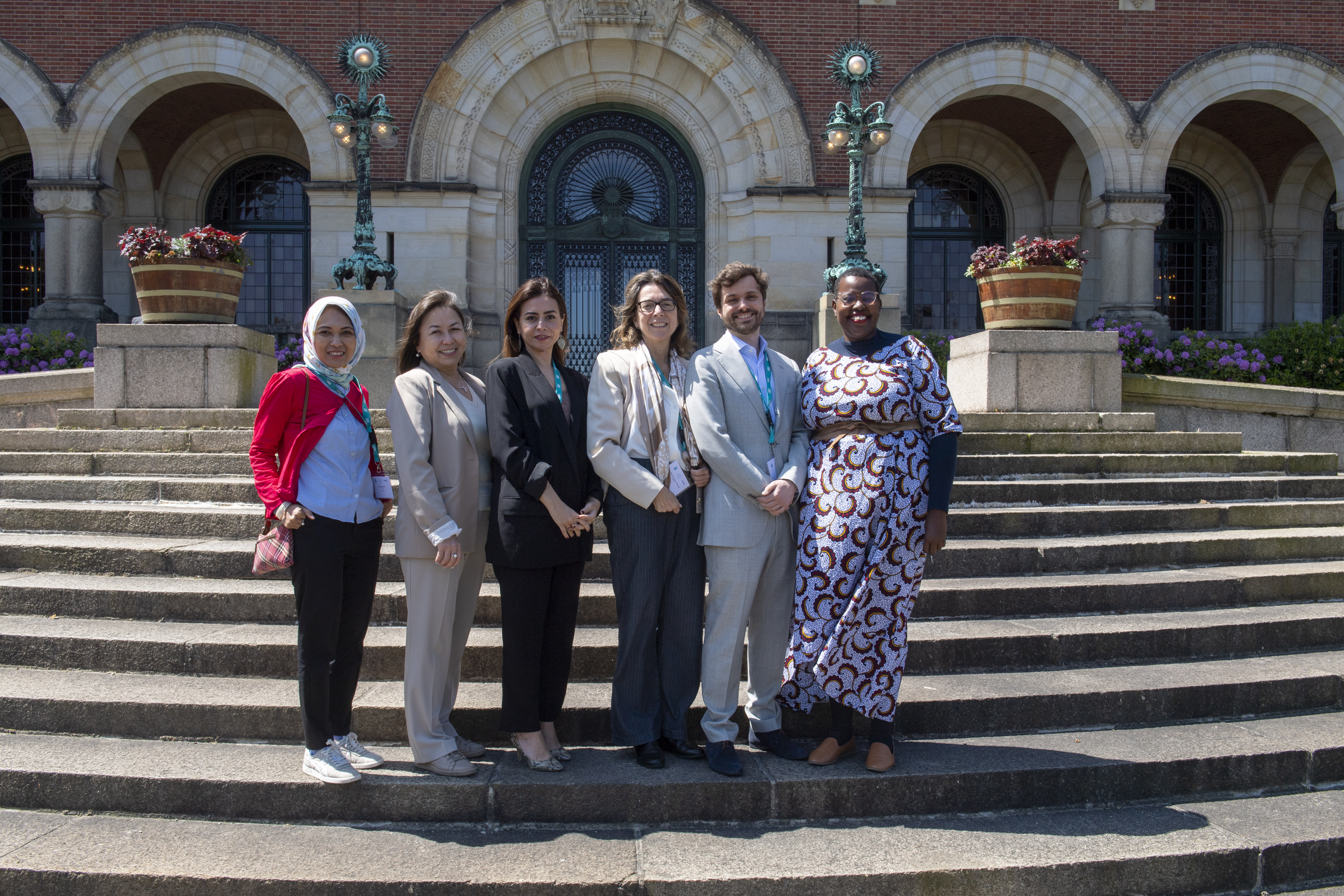
The EDI Working Group continues the work of the Gender Working Group formed in 2017 to contribute to implementing the Statement of Principles and Actions: Promoting the Equality and Status of Women in Research (endorsed in 2016). As of 2023, to accommodate the increased mandate, the Gender Working Group was renamed EDI Working Group. Accountable to the Executive Support Group, the group is guided, in its deliberations, activities, and strategic planning, by the idea that broadening participation and practicing inclusive analysis contributes to research and innovation. It promotes gender equality from an intersectional perspective, considering the overlapping of gender with other dimensions of inequality, such as race, ethnicity, socioeconomic status, disability, and geographical location. On that basis, the EDI WG is advancing the following initiatives:
- Promoting the integration of an equity, diversity, and inclusion lens into the design of the GRC’s vision for the next ten years, strategic planning, road map, and annual themes.
- Striving to integrate relevant EDI considerations in GRC-developed programs, resources, and future work streams.
- Working to build knowledge and provide strategic and transformative analysis and advice to the GRC and the member organizations on an ongoing basis.
In 2021, the EDI WG produced a seminal report underscoring the importance of collecting, analysing, and reporting gender-disaggregated data. This report marks the first aggregation of trends, practices, and experiences of GRC-participating organisations regarding gender-disaggregated data. It focuses on applications, review, and funding; the gender dimension in research; and data at the intersection of equality, diversity and inclusion.
The working group is composed of representatives from all the GRC regions nominated and supported by their respective GRC Heads of Research Councils. Each region has a dedicated Lead to champion engagement and activities in their respective region. The EDI WG may request additional expertise as necessary.
Current members
| Americas | |
| Anne Webb (Regional Lead) | Natural Sciences and Engineering Research Council (NSERC) Canada |
| Paloma Bravo Torres | National Agency for Research and Development (ANID) Chile |
| Sharapiya Kakimova | National Agency for Research and Development (ANID) Chile |
| Stephany Scotto | National Agency for Research and Innovation (ANII) Uruguay |
| Asia-Pacific | |
| Riana Yeates | Australian Research Council (ARC) Australia |
| Nicola Jenkin (Regional Lead) | Ministry of Business, Innovation and Employment (MBIE) New Zealand |
| Thilina Kandanamulla | National Science Foundation (NSF) Sri Lanka |
| Europe | |
| Adrien Braem | Science Europe Europe |
| Eva Reichwein (Regional Lead) | German Research Foundation (DFG) Germany |
| Marion Boland | Taighde Éireann | Research Ireland Ireland |
| Jordan Girardin | Swiss National Science Foundation (SNSF) Switzerland |
| Duygu Çelik | The Scientific and Technological Research Institution of Türkiye (TÜBİTAK) Türkiye |
| Nia Glover (co-lead) | UK Research and Innovation (UKRI) United Kingdom |
| MENA | |
| Maryam Al Nabhani | Ministry of Higher Education, Research and Innovation (MoHERI) Oman |
| Sadim Jawhar (co-lead) | National Research Fund (QNRF) Qatar |
| Sarah Binghadir (Regional Lead) | King Abdulaziz City for Science and Technology (KACST) Saudi Arabia |
| Sub-Saharan Africa | |
| Amina Kabore | Le fonds National pour la Recherche et de l'Innovation pour le Developpement (FONRID) Burkina Faso |
| Sine Diop | Ministère Enseignement Supérieur et Recherche (MESRI) Senegal |
| Bestina Daniel | Tanzania Commission for Science and Technology (COSTECH) Tanzania |
| Nsama Makata | National Science and Technology Council (NSTC) Zambia |
| Rudo Tamangani | Research Council of Zimbabwe (RCZ) Zimbabwe |